
Hayden School District
Home of the Tigers
Board of Education Fact Sheet
Two Ballot Questions:
Hayden School District NO. RE-1 Ballot Issue 4A - (Mill Levy Override 3.0M or $525,861)
Hayden School District NO. RE-1 Ballot Issue 4B - (CMC Annexation with 3.82M, estimated $669,596)
Who we are: https://www.haydenschools.org District Website
CDE State Website https://www.cde.state.co.us/schoolview/financialtransparency/organizations/2760
Hayden School District - 426 Students as of 10/01/25 includes; Hayden Valley Elementary Preschool with 25 pupils, Hayden Valley Elementary School with 189 pupils, Hayden Middle School with 103 pupils, and Hayden High School with 109 pupils as of October 1, 2025.
Continue growth in student achievement
Recruit & retain high-quality staff
Maintain & expand student options
Strengthen career & college preparation
Current & Past Budgeting
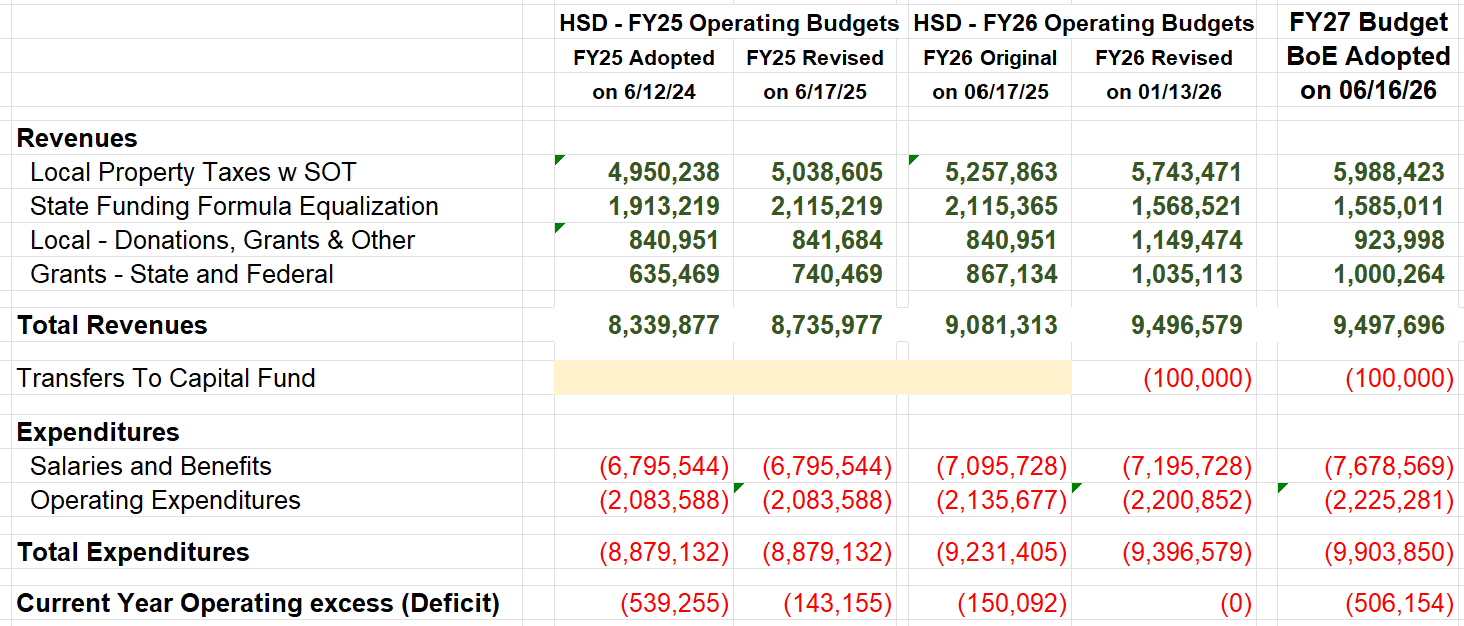
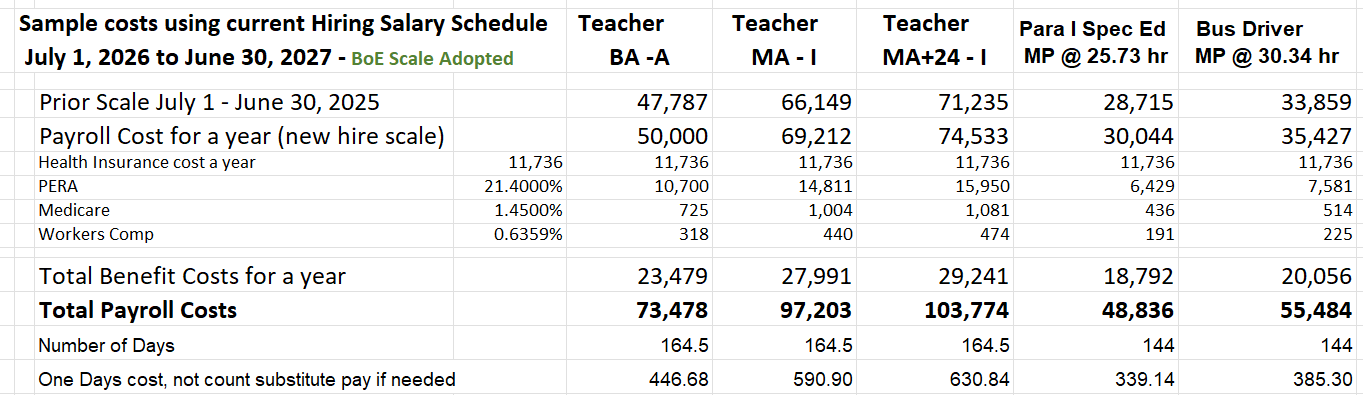
HSDR1 complies with the State of Colorado budgeting regulations and approves a Budget before June 30th every year and revises it, typically by January 31st if needed.
The District has set a goal of having approximately 1/2 a year in Fund Balance for operations to cover State requirements, Tabor, Rainy Day and cash flow needs for property collections. Currently that reserve is over 6 months, putting the District close to the State average. The Rainy Day portion of that collective reserve is between $1.4M and $1.5M.
See COSA Link Below.
Accountability
CDE – School Finance - School Finance Unit - Colorado Department of Education
CDE – Performance Framework Reports and Improvements SchoolView Frameworks
Colorado Office of State Auditors (COSA) - Colorado School Districts Fiscal Health Analysis, Fiscal Years 2022-2024 is the last report, released on 10/01/2025 -
Background Information
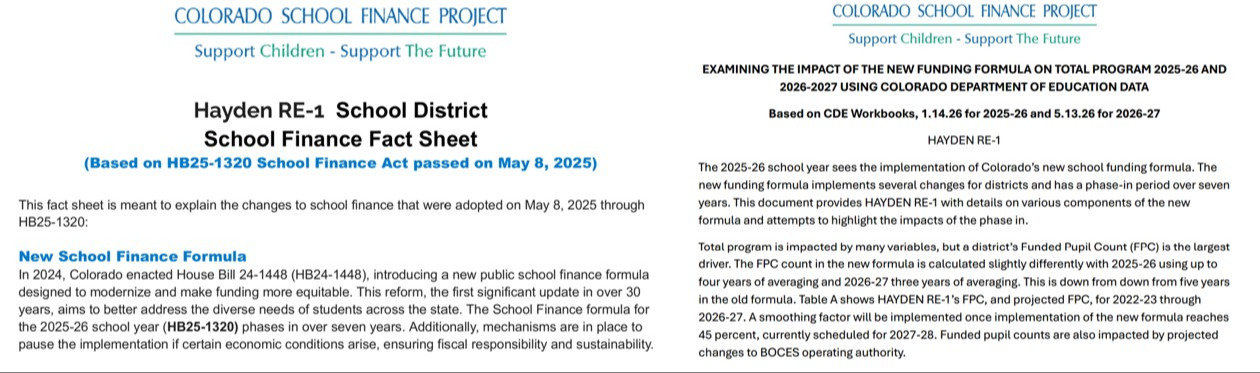
The Hayden School District is in a changing environment with Colorado making changes to the State School Finance Formula that had not been changed in decades. A plan was developed after the State of Colorado completed two Adequacy Studies in 2023 to 2024, see the two Studies here. The studies pointed out that the State needed to make some improvements in how Schools are funded. The Colorado School Finance Project published fact sheets (https://cosfp.org) and here is one for Hayden (link).
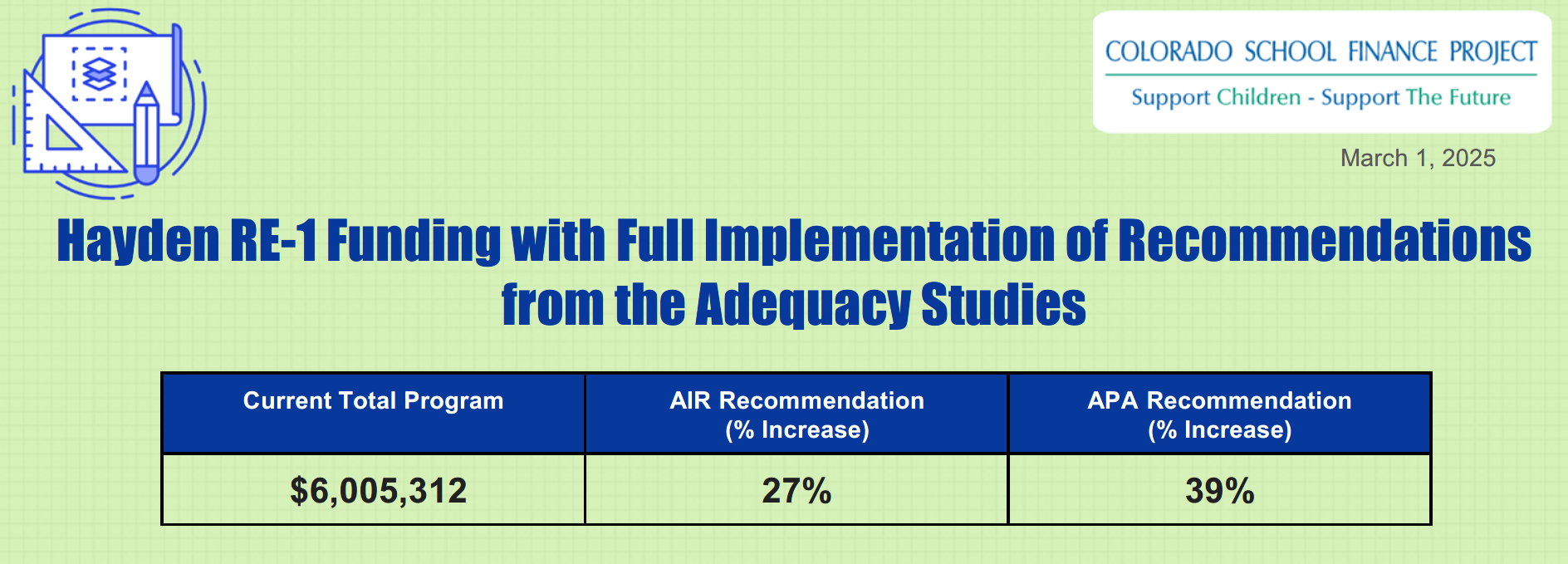
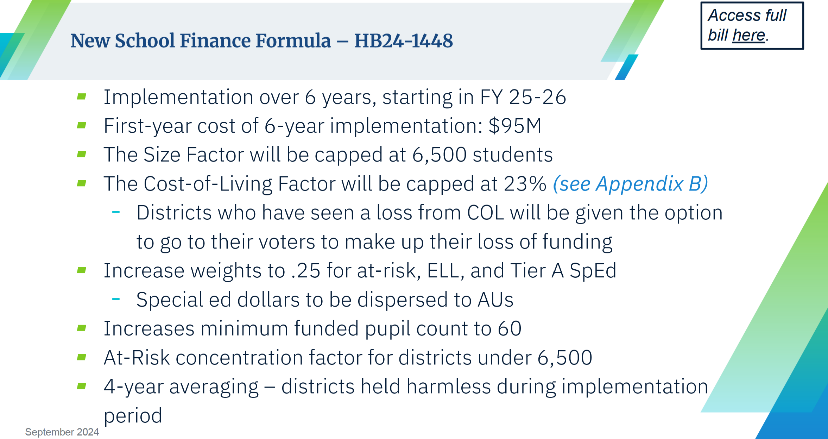
What this means for the Hayden School District is that in FY25 the District should have been funded more, between $1,621,434 (27% of $6,005,312) and $2,342,072 at 39% per the two studies. The State did not have the resource to address the full requirement of the studies but it helped drive the revisions to the Colorado School Finance Formula. This started with Colorado starting a major investment in the States Schools by adopting a new formula and implementing it with HB24-1448. This started to address the additional funding needed by a multi year phased implementation. Adjustments made through legislative changes impacting property taxes and the economy take a turn for the worse, the State adjusted their implementation plans before getting into the 2nd year of implementation. The adjustments to the formula started with with HB25-1320 for 2025-2026 (FY26) and then continued with this past year with SB26-023. Below is a summary of the new formula followed by two fact sheets on the next steps in it's implementation, specific to Hayden School District.
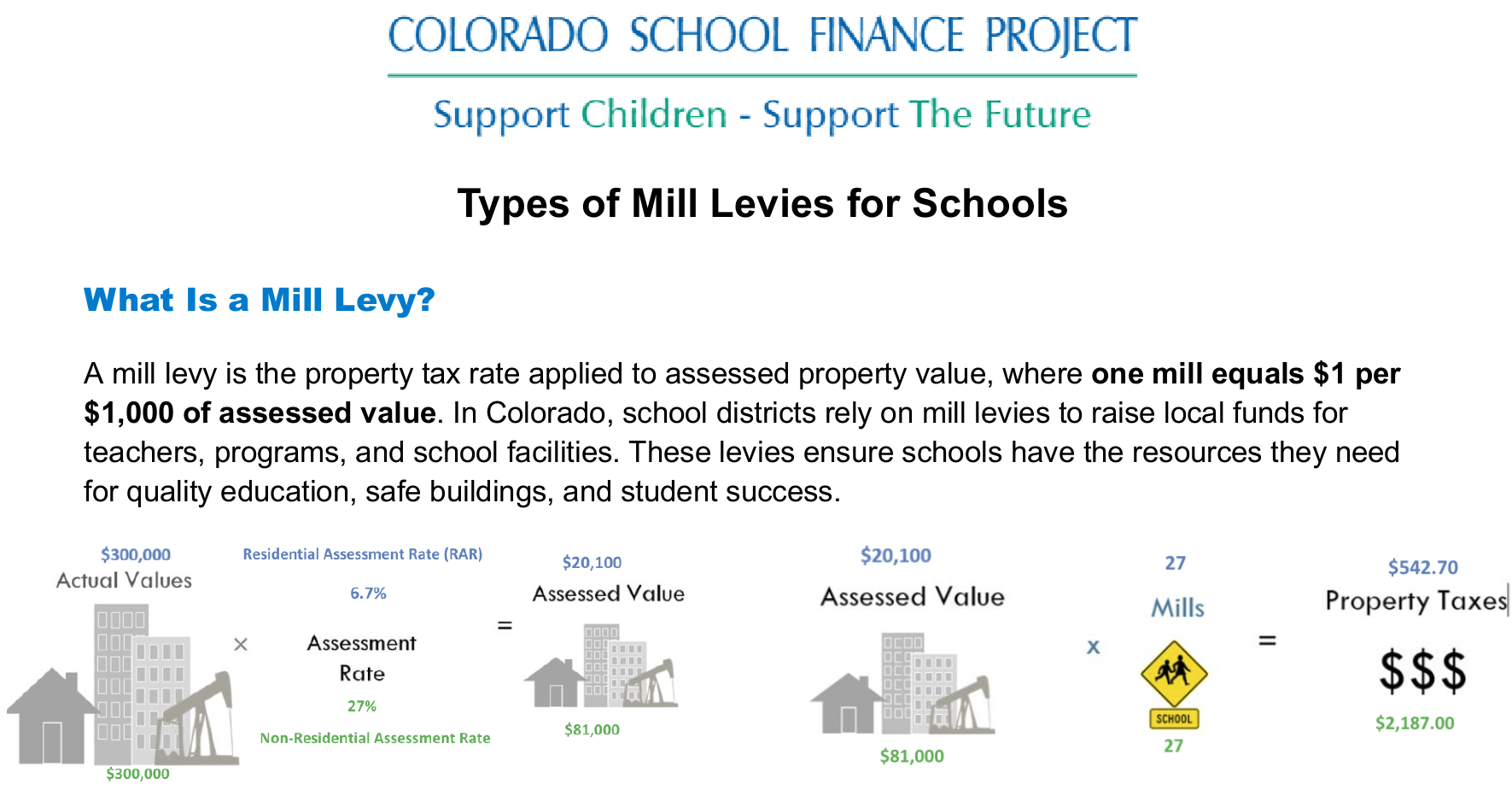
The State of Colorado’s School Finance Formula relies heavily on Property Taxes. They play a key role in what a School District will be paid for educating their students, and impacts our District’s stakeholders in their pocket books. Below is a summary, taken from a Colorado School Finance Project (CSFP) handout shared May 27, 2025, that explains what a mill levy is. Click for the file.
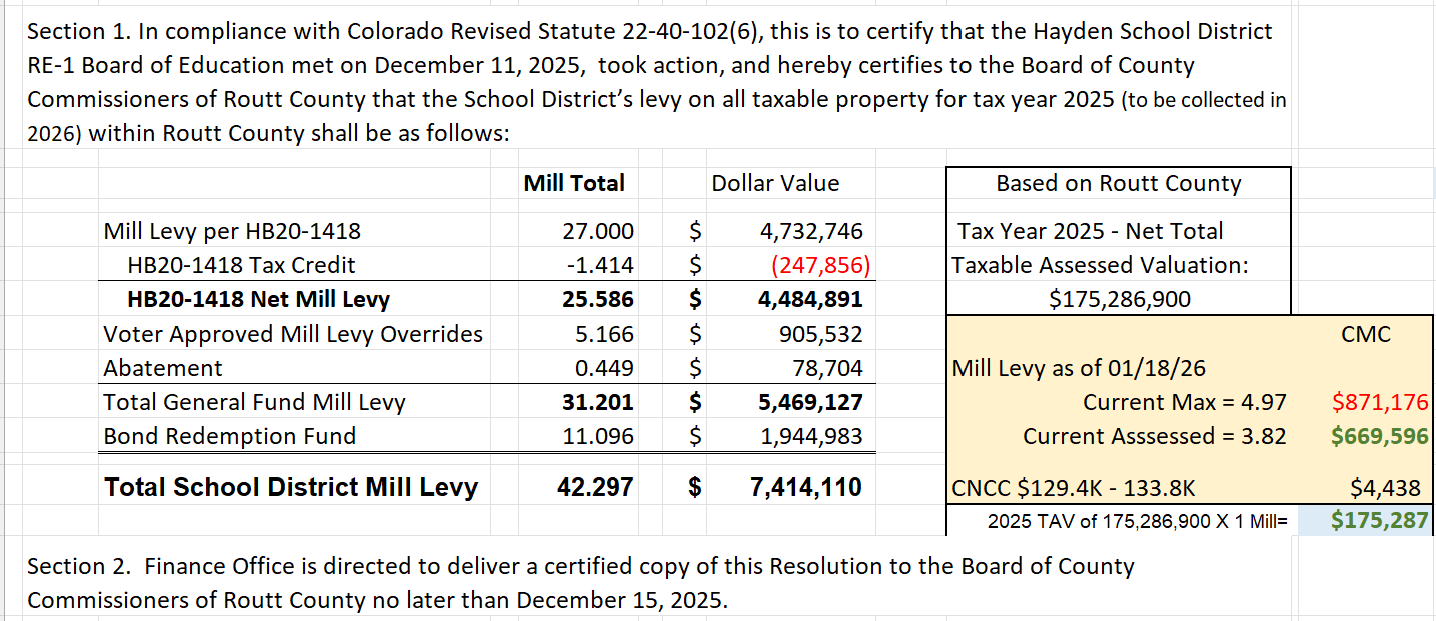
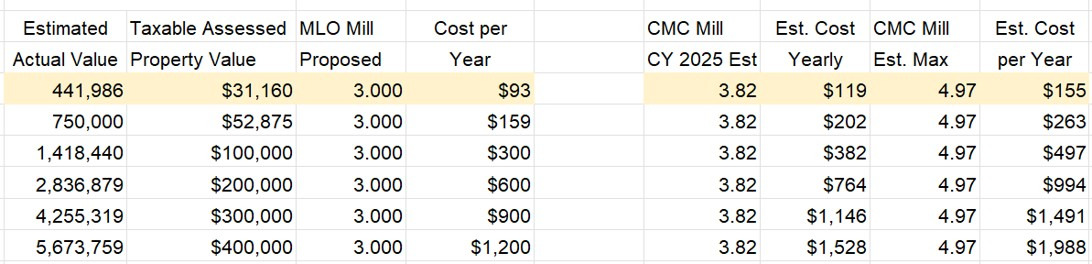
When Hayden School District certifies Mills in December each year, this helps fund the School Finance Formula by offsetting the Total Program Costs. See an example of the Mills that were submitted in December 2024 that CSFP broke out for those taxes collected in Calendar Year 2025, or District Fiscal Year 2025-2026 (FY26), Below is the most recent certification for CY 2025 with the estimated costs of the CMC Annexation in the box to lower right. The Board of Education's Certification sent to Routt County in December 2025 is here. The Total General Fund Mill Levy is part of the funding formula. The Bond Redemption Fund Mill is what is used to pay of the $22 million in bonds that were approved by tax payers in 2017 to consolidate and update the 300 Breeze Basin Blvd campus. This leveraged an additional $38.9 million in State Funds for our District to complete the BEST Capital Project.
The following is an excerpt based on the worksheets that are used in tracking the School Finance Funding Formula by Colorado Department of Education (CDE). This shows the prior two years funding, School Year July 1, 2024 to June 30, 2025 (FY25), which collected taxes from Calendar Year 2024 in Jan – Dec of 2025, and School Year July 1, 2025 to June 30, 2026 (FY26). The column in yellow is the Fiscal Year 2026-2027 (FY27), for 07/01/26 to 06/30/27, starting point for determining the Total Program Funding for the District, as authorized in SB26-023, see Fiscal Note.
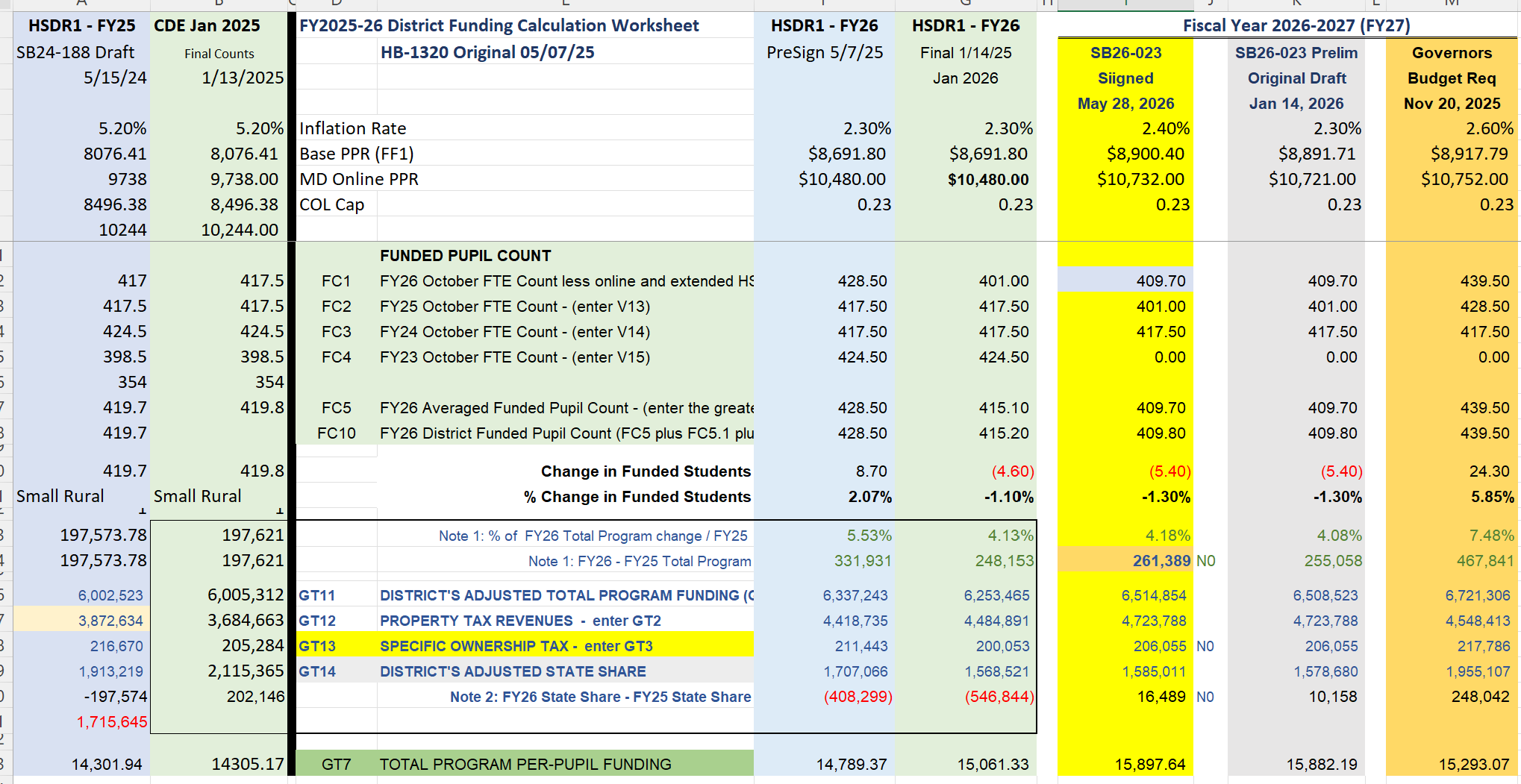
The columns to the right show the changes from when the Governor submitted his budget in November, 2025 through the updates that were made to reflect the impact of the actual number of students attending on October 1st, 2025, see green columns above. Students drive the School Finance Formula and the process starts with projections by State Agency’s through the adoption of the School Finance Act for each year.
The past two years the District has certified the following Mills in December of each year typically before December 15th. They make up the Local Share needed for the School Finance Formula.
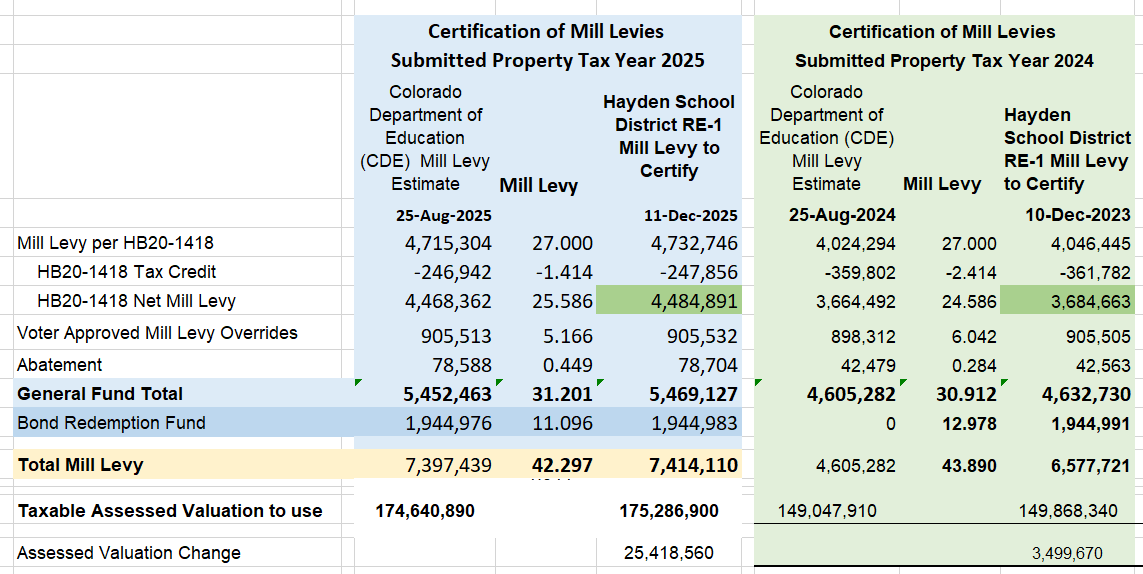
See the Certified amounts for both FY25 and FY26 (dark green highlight) which match the Property Tax Revenues in the Final numbers used in January to adjust estiimations to the actual student counts. See line GT12 in green columns for past
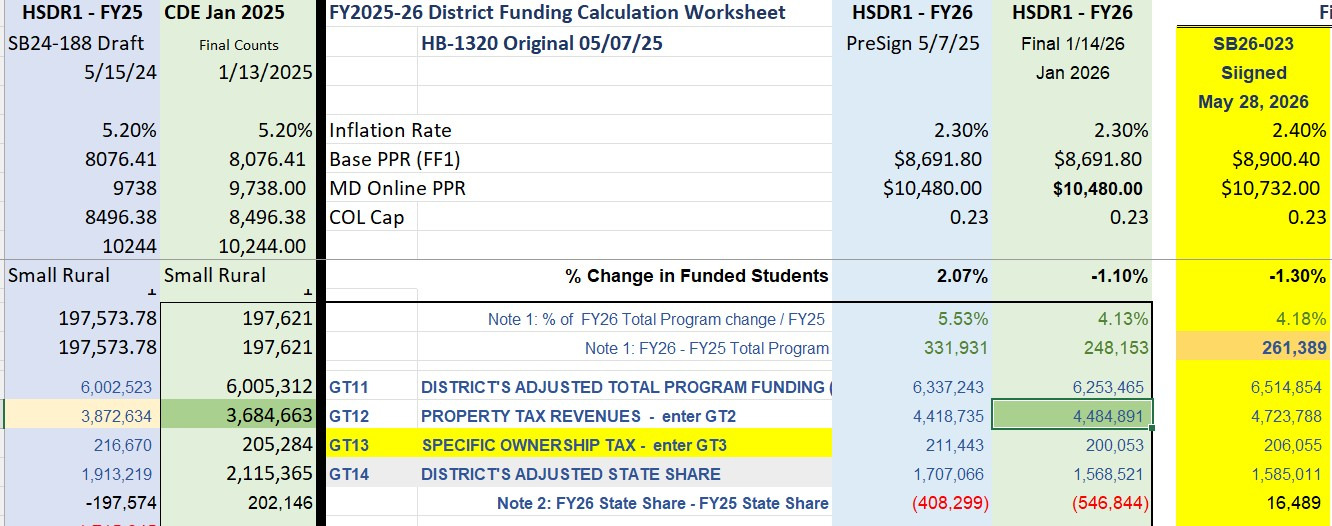
As can be seen in the previous tables above, the State of Colorado sets the funding level for the District by defining the Total Program Funding based on the current formula. It then subtracts 2 local taxes the District receives, Property Taxes and Special Ownership Tax (the % paid by District’s varies). The remaining amount is made up by the State and is called the Districts State Share.
What this means for each District is that, as their number of students vary and the valuation of local property changes, the District will receive a different amount each year. As the State has seen in the past when their Budget's get tight, they cannot always fund the Total Program Funding needed. To offset this they used a Budget Stabilization Factor (BSF), the handout from CSFP shows impact to Hayden School District. This is what has happened when the Colorado Budget process faces hard times and how they have taken from schools to cover other State needs, from FY10 to FY24 the State reduced Hayden School District funding by $5,945,264.
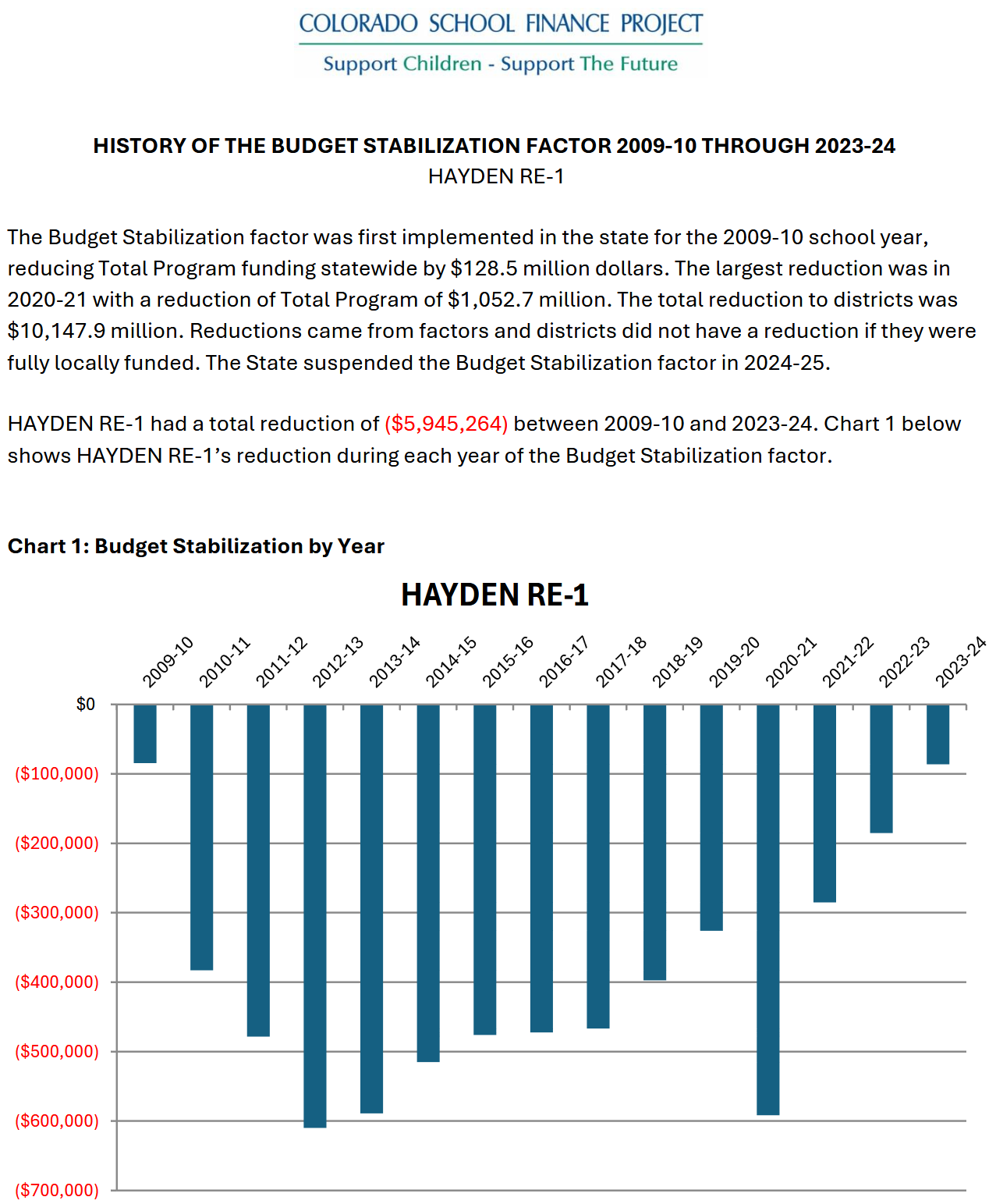
Recently we are no longer under the BSF or receiving cuts to the School Finance Formula with it's use. But as a person can see, we went almost a decade and a half adjusting our services since funds were not funded.
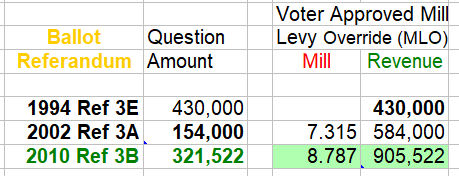
One of the tools in the School Financing Formula that helps Districts make up some of this short fall in funding is the Mill Levy Override (MLO) process. This allows local board of educations to put requests on ballots asking for additional funding for specific needs. Hayden School District has asked our local tax payers for additional funding, and, since 1994, has been able to increase the Districts funding by $904,522 a year. Starting 30 years ago with a $430K MLO request through the most recent $321.5K requests start in 2010 and extended in 2018.
The District is currently requesting an additional 3 Mills, or $525,861, as we are facing the same types of issues we have in the past. That is attracting and retaining staff in our community where our competition pays more than 10% than we can currently. Getting the District to a breakeven Budget, as required by state law, is one of our priorities. The District is identifying costs to cut and trying to raise other revenue in order to revise the Fiscal Year 2026-2027 Operating Budget adopted in June 2026. The current adopted budget went as far as reducing the Capital Transfers down to $100,000 versus the $550,000 that should be set aside for Building replacement if a person was just using our share of the current Campus costs of $22,000,000/40 years = $550,000.
There are some individuals that believe that the District’s Property Tax Revenue increases the same amount as the increase in Property Valuations. Below is a chart that shows what the past decades change in Assessed Property Valuations have been. Notice the Voter Approved MLO Mills have gone down, blue box to the right. FY14, Calendar Year 2013 8.646 Mills versus FY26, Calendar 2025 rate mailed out this was 5.246 Mills, for a reduction of 3.4 in Mills.
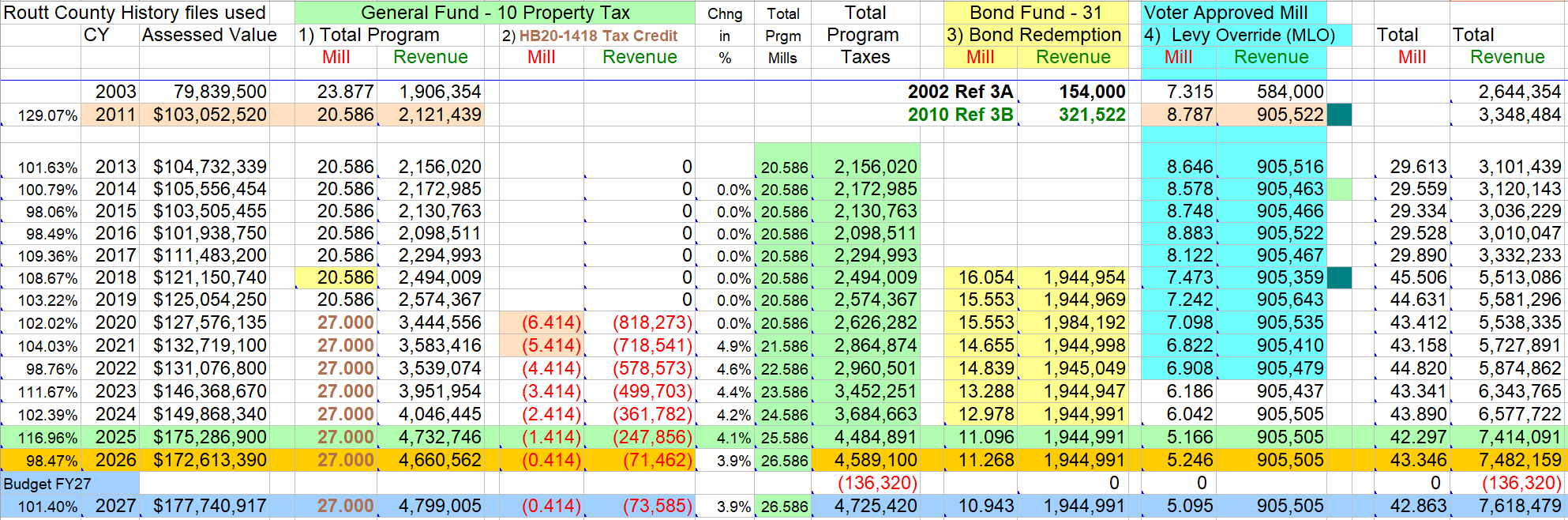
As the “What is Mill Levy” showed before, depending on the current assessment, laws and number of students the District serves, they do not get the same percentage as the Taxable Assessed Value percentage when it goes up. For example in 2023 and 2025 when the values went up 11.67% and 16.96% the Districts change in Mills only went up 4.4% and 4.1% respectively.
Another mis-informed point that gets buried is that the District's Mill Levy Overrides (MLO) is always going up, when in fact, they are fixed amounts and unless Taxable Assessed Value drops, the MLO Mills have constantly dropped each year, in FY18, Calendar year 2017 they were at 8.122 for our MLO, and currently for FY27, CY26 they are currently budgeted at 5.095 Mills. This is based on the current certification done in December 2025 for FY26.
The 3 Mills being requested would equal about $93 a year increase for a person owning a $441,986 House with a Taxable Assessed Value of $31,160. So for the cost getting a monthly subscription to a sports package, or skipping a meal out for two, the District's stakeholders can help our students and allow the District to balance the budget and focus on improving services. See examples below for impacts to the District's stakeholders.
The Hayden School District has been trying to get to a breakeven budget for a number of years. the Board of Education has adopted budgets with deficits, but have been saving funds from vacant special needs positions and other vacant teaching positions. Up until recently we had seen a few changes to our Student numbers as reported to CDE. Comparison information for all District can be found at their website Home - Colorado Department of Education. A person can select For Schools & Districts and find a lot of current and historical information as all School Districts are required to report information yearly for variable collections, including those that track student’s date from attendance through financial information for all school districts. See the following from the CDE website:
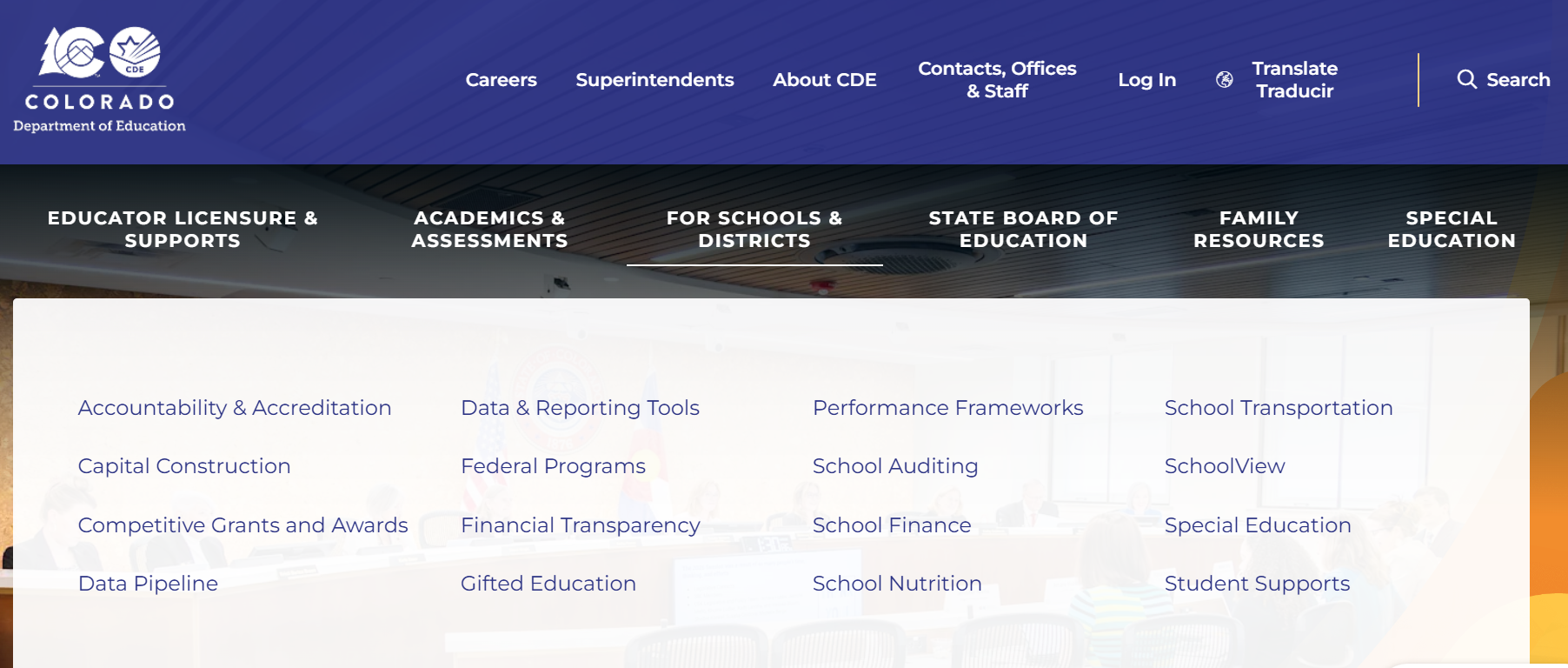
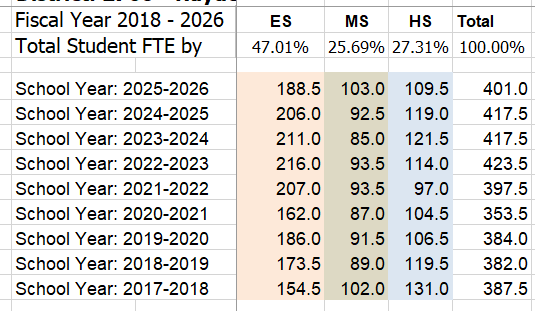
Table to the left shows the number of students served in Hayden’s three schools, that are located at 300 Breeze Basin Blvd, Hayden, CO 81639. The States websites tracks our schools as;
2522 - Hayden Valley Elementary
3860 - Hayden Middle School
3862 - Hayden High School
Below is a table breaking out students by grade level as shared with CDE. As we are preparing for the current October 1st Count, which will determine our numbers for FY27, we are anticipating they will trend closer to FY21 numbers.
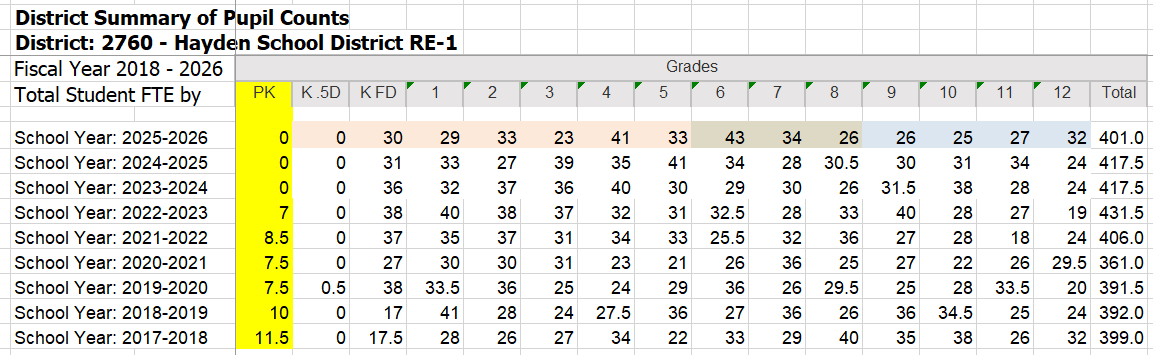
As mentioned, this drives Hayden School Districts’ base in the School Funding Formula and contributes to approximately 80% of the school’s yearly revenue.
Another reporting requirement is the Annual December Count of staff that occurs in December and is reported to CDE by Mid-February every year.
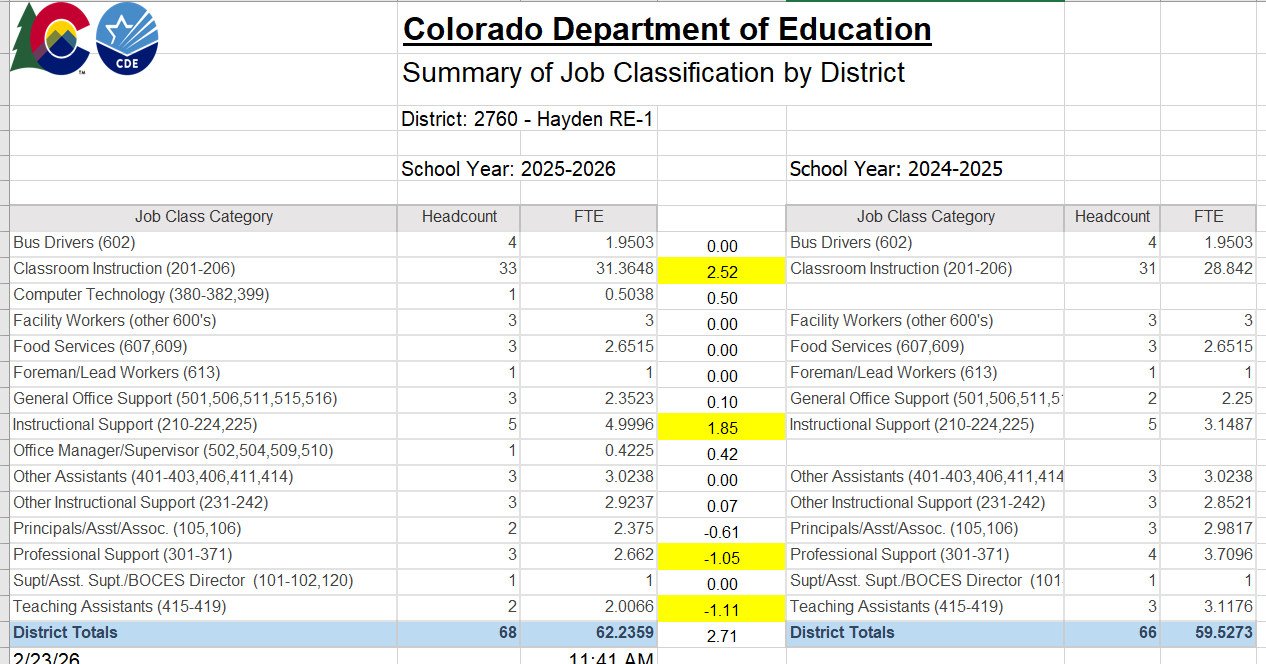
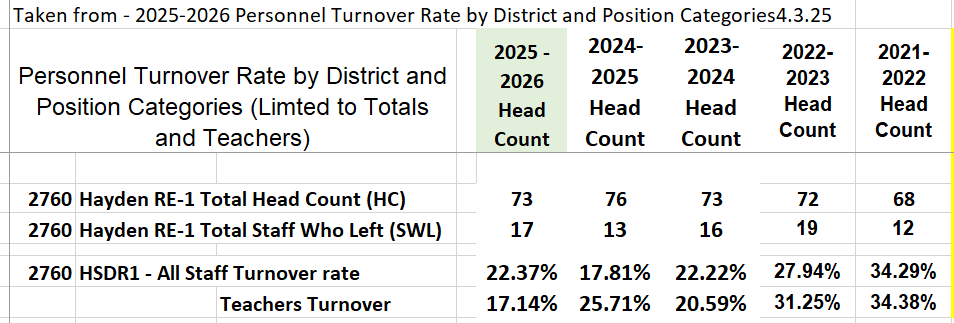
CDE also tracks staff turnover and pay, which the following report was developed from their website files;
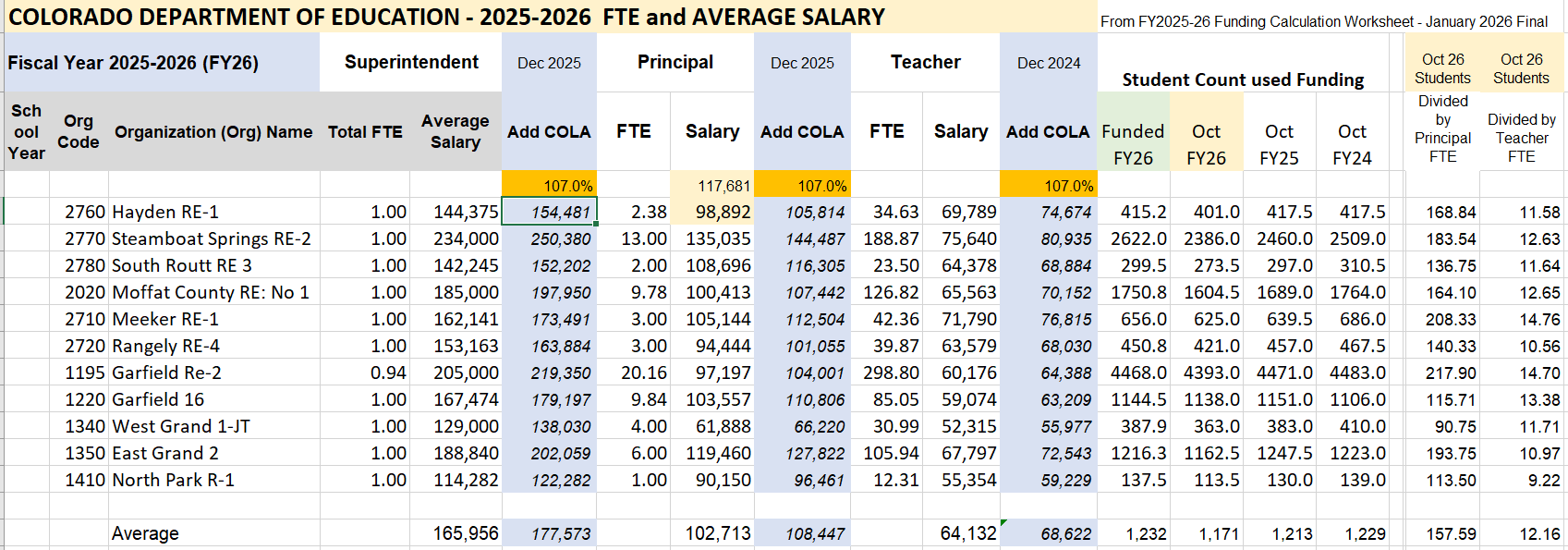
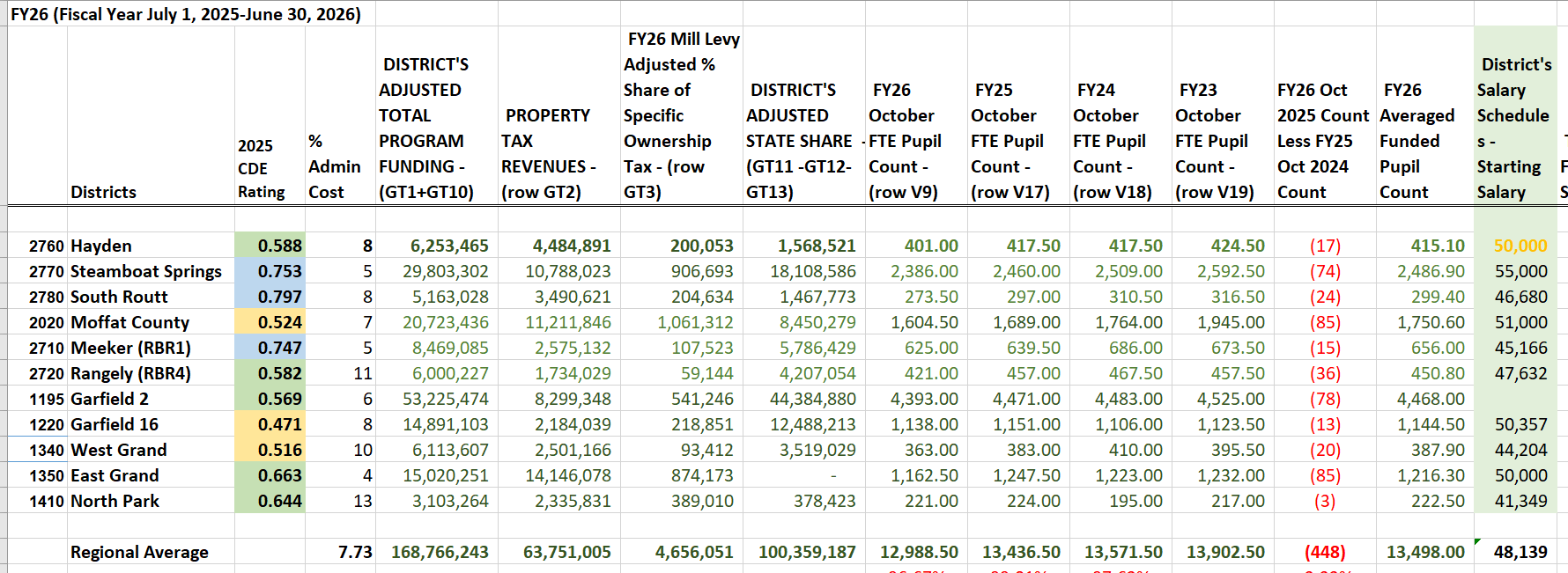
The following tables were all developed from visiting the following websites;
CDE – School Finance - School Finance Unit - Colorado Department of Education
CDE – Financial Transparency - https://www.cde.state.co.us/schoolview/financialtransparency/homepage
CDE – Performance Framework Reports and Improvements SchoolView Frameworks
These sites allow stakeholders to compare Districts and Schools for how they are performing and how they are spending their funds, along with where their funds are coming from.
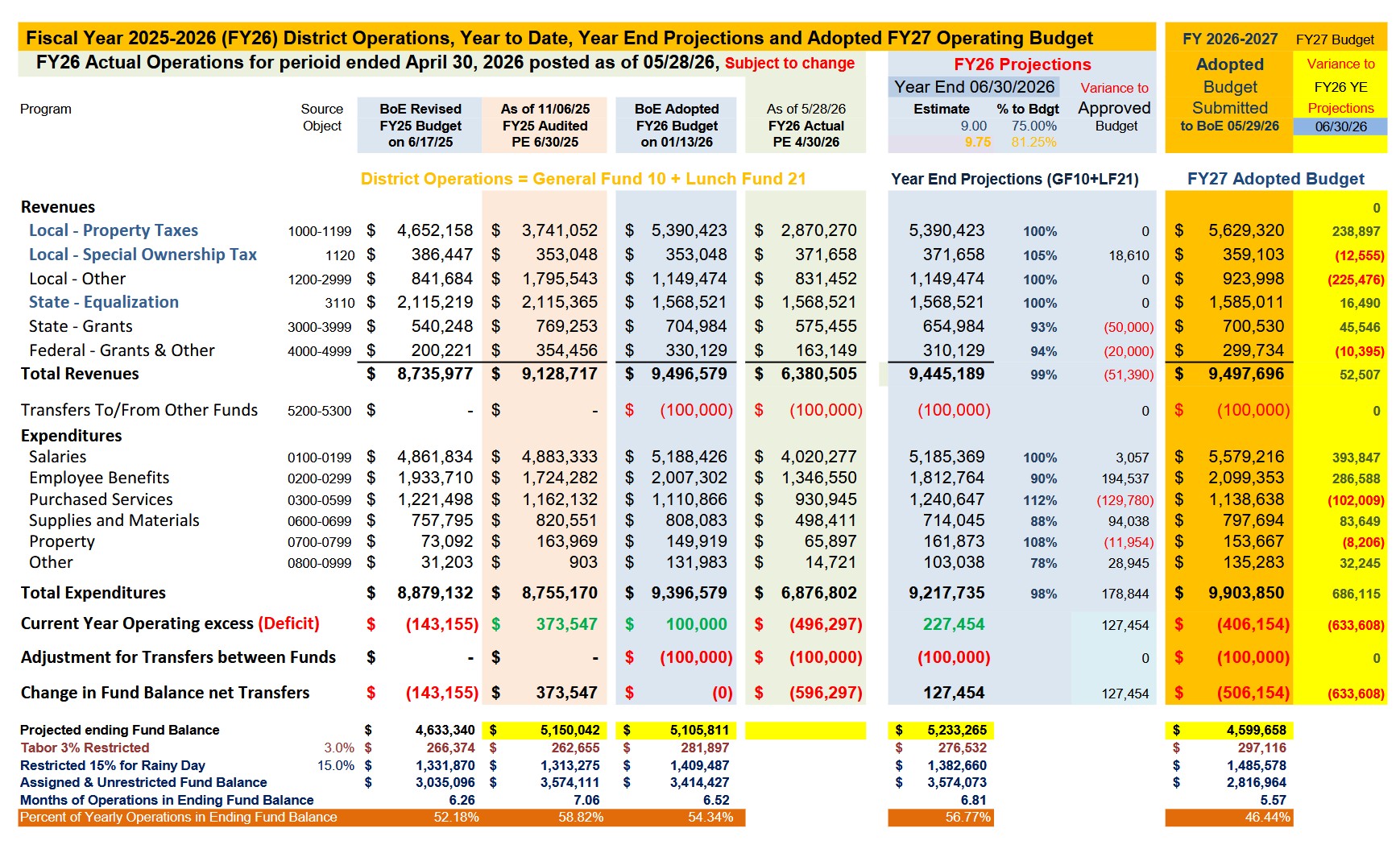
Why is the District asking voters to look at funding an additional 3 Mills for FY27. It starts with the District’s budgeting and projections. Hayden School District RE-1 Board of Education has started the past few School Years with Deficit Budgets, which they can only adopt if they have a plan to get the District back to a breakeven budget within a year. As the last page of the FY27 Operating Budget shows, the District is currently projecting a $506,154 operating deficit, with a goal to get to a breakeven budget by year end. The plan is either to raise additional revenue, hence the request to stakeholders, and/or cutting positions to balance the budget.
If a person reviews the District’s website they will see the budgets and audits of the District. https://www.haydenschools.org/o/hsd/page/district-adopted-budget-including-uniform-budget-summary-current-and-prior-two-years and select FY 2025-2026 They will also see on the last page of the initial FY25 District Operating Budget, a $539,255 deficit projected and the District stopped transfers to the Capital Fund to keep reach . This transfer, by policy, should be between $140,000 to $340,000 a year. The District has ended the years by pursuing grants to increase revenue and not having filled all positions needed, especially in Special Needs Teachers. The District wa able to get FY25's Operating Budget down to a $143,155 deficit, without any capital transfers
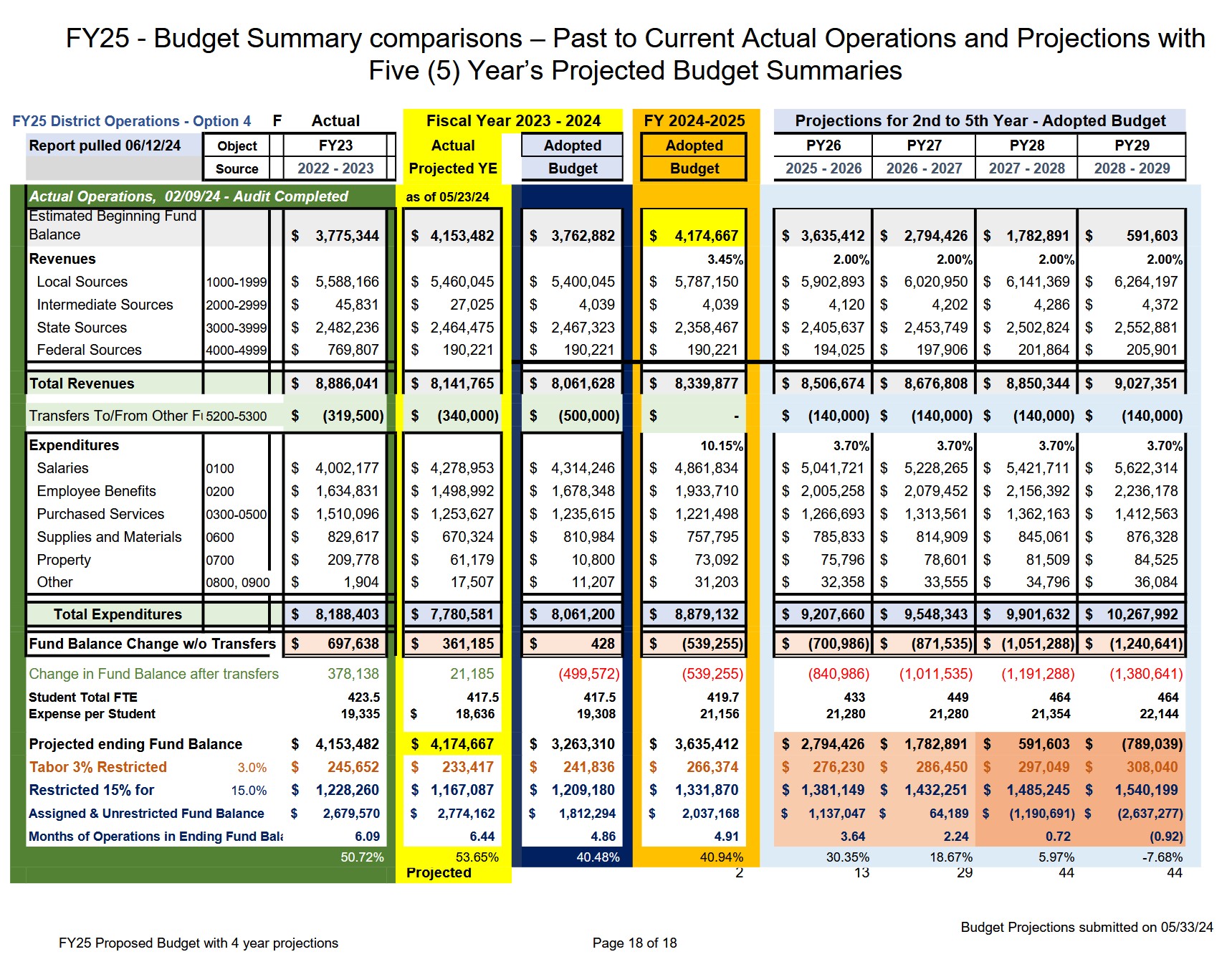
As the last page from the FY26 Budget shows below we have tried to get to a break even and made strides in FY26 including adjusting the Budget in January 2026 to reflect the additional revenue we found while truing up to the State Funding Formula for FY26.
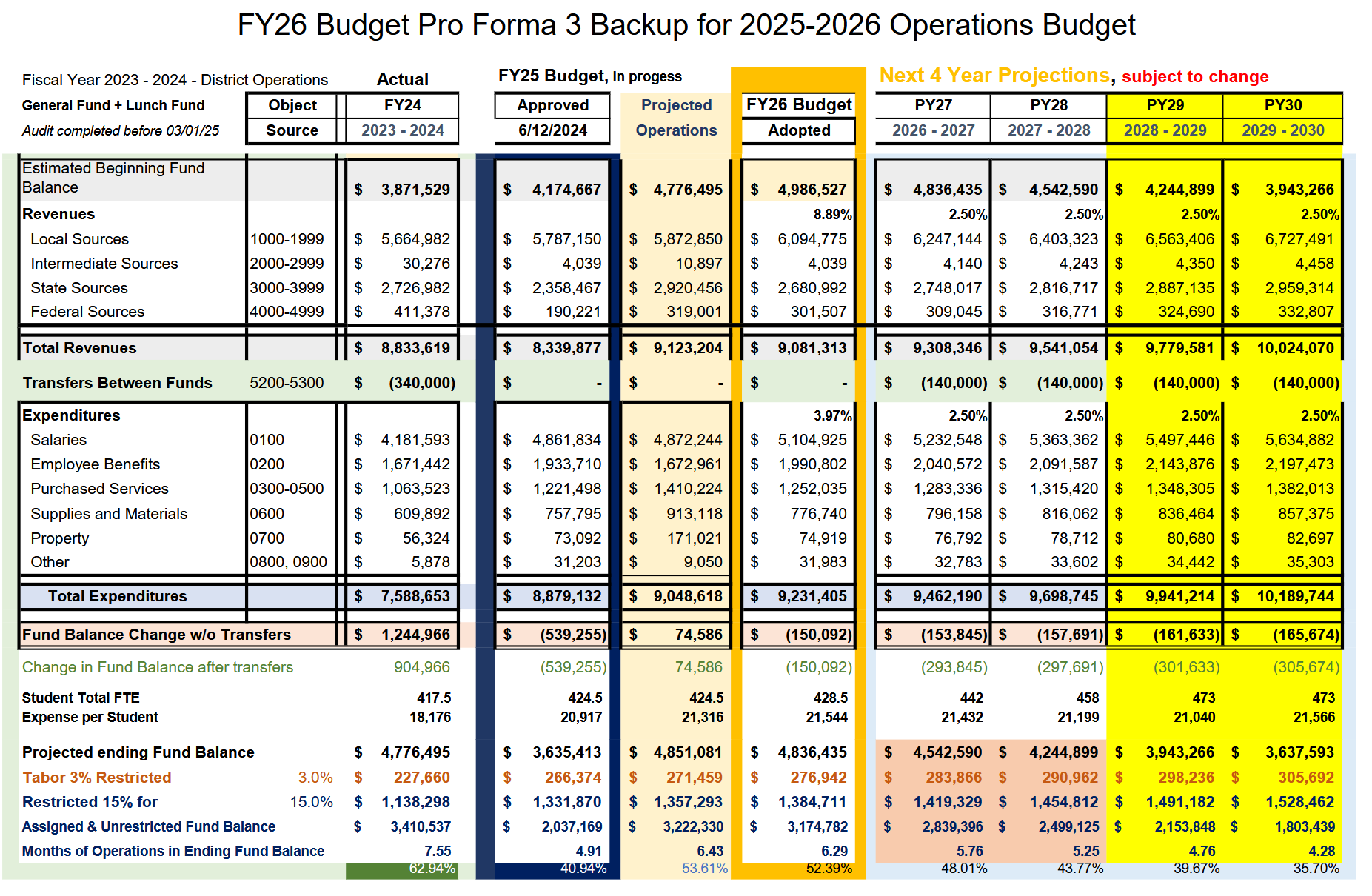
See blue column below, for the ending FY26 Operating Budget, which was at a breakeven and added $100,000 in Transfer to Capital Fund.
The District would have had to frozen staff pay in order to start FY27 at a breakeven. In order to try and attract staff, and keep existing staff, the Board of Education adopted a defict budget for FY27, see orange column to the right int the table below. The goal is to go after additional revenues to avoid cutting staff positions. As can be seen below, Payroll and Employee benefits make up 77.5% of the District's Operating Expenditures. The District is not anticipating an increase in the State Funding Formula as our numbers are trending down this year.
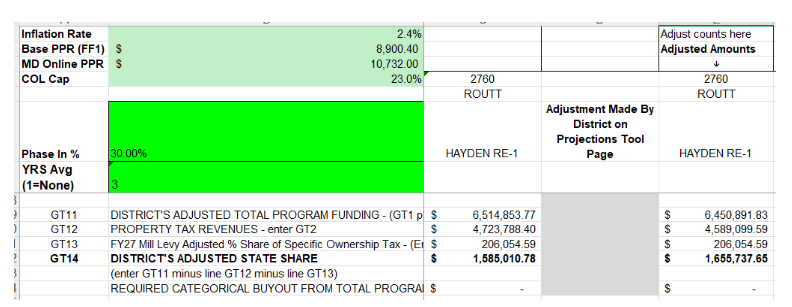
As the District is preparing for a Budget Revision, in January 2027, we are looking at trying to increase our revenue versus cutting staff which could impact meeting our students needs. It appears at this time that we could see a drop in Total Program Funding of $64K, see the table below that projects the change in current student numbers.
The District has made strides in staffing and our turnover, and are not wanting to go backwards. Especially with our teachers, where we have been able to drop our turn over rate from 34% to 17% between FY22 to FY26.
Any questions please reach out to the Finance Department at 970.276.2033.